
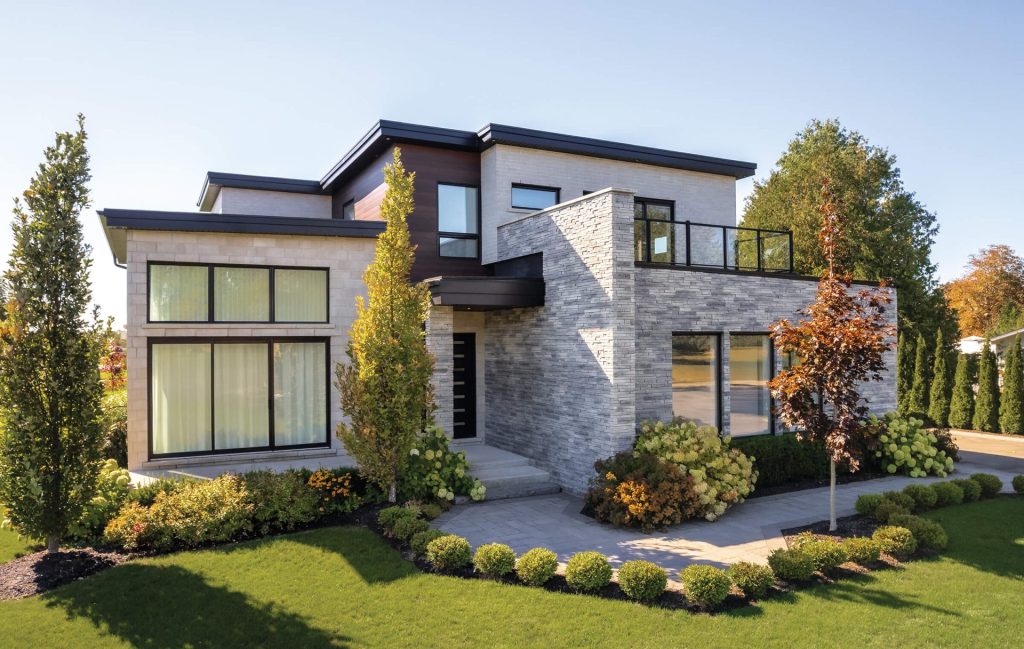
At first glance, this contemporary home makes a strong impression. The facade is more than a simple vertical wall: it organizes the different parts of the building, captures light and enhances the architecture. The combination of Lamina stone, Lexa stone and Melville Slik brick creates a three-dimensional composition in which each material is used in a specific location to enhance the design. The light tones of the Lexa stone and the Melville Slik brick act as a backdrop, creating contrast with the darker tones of the Lamina stone. The result is a facade that feels both contemporary and cohesive.
A Facade Structured Through Depth
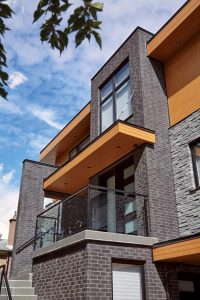
The facade alternates between setbacks, projections, columns and load-bearing walls, clearly distinguishing the different sections of the house. These variations create depth and natural shadow zones that evolve throughout the day. The second-level terrace reinforces this dynamic by introducing a strong horizontal line and ensuring a smooth transition between floors. The same materials are carried from one level to another, creating a continuous facade despite changes in height.
Lamina Stone as a Textural Signature
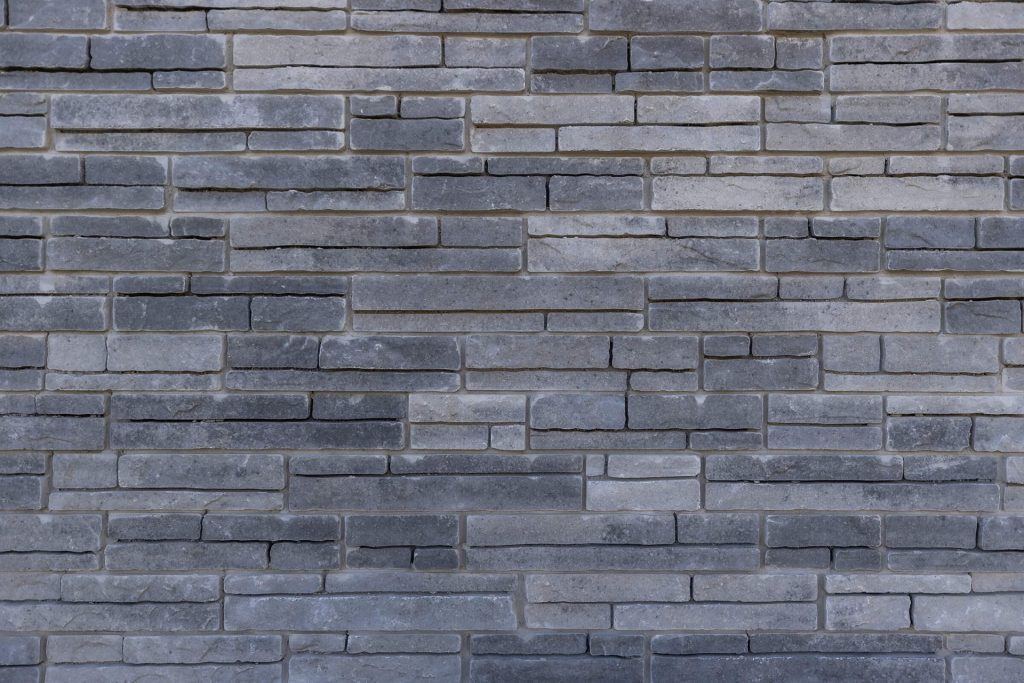
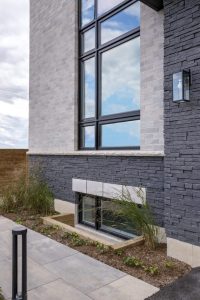
Lamina stone in range Newport Grey is the most prominent material on the facade. Its stacked thin-stone appearance brings a rich, lively texture that structures the wall surfaces. Each stone features subtle variations in relief, adding movement and avoiding an overly uniform look. Used on the most exposed sections, Lamina stone naturally draws the eye. It gives the house character and establishes a clear visual identity.
Light Tones That Highlight Texture
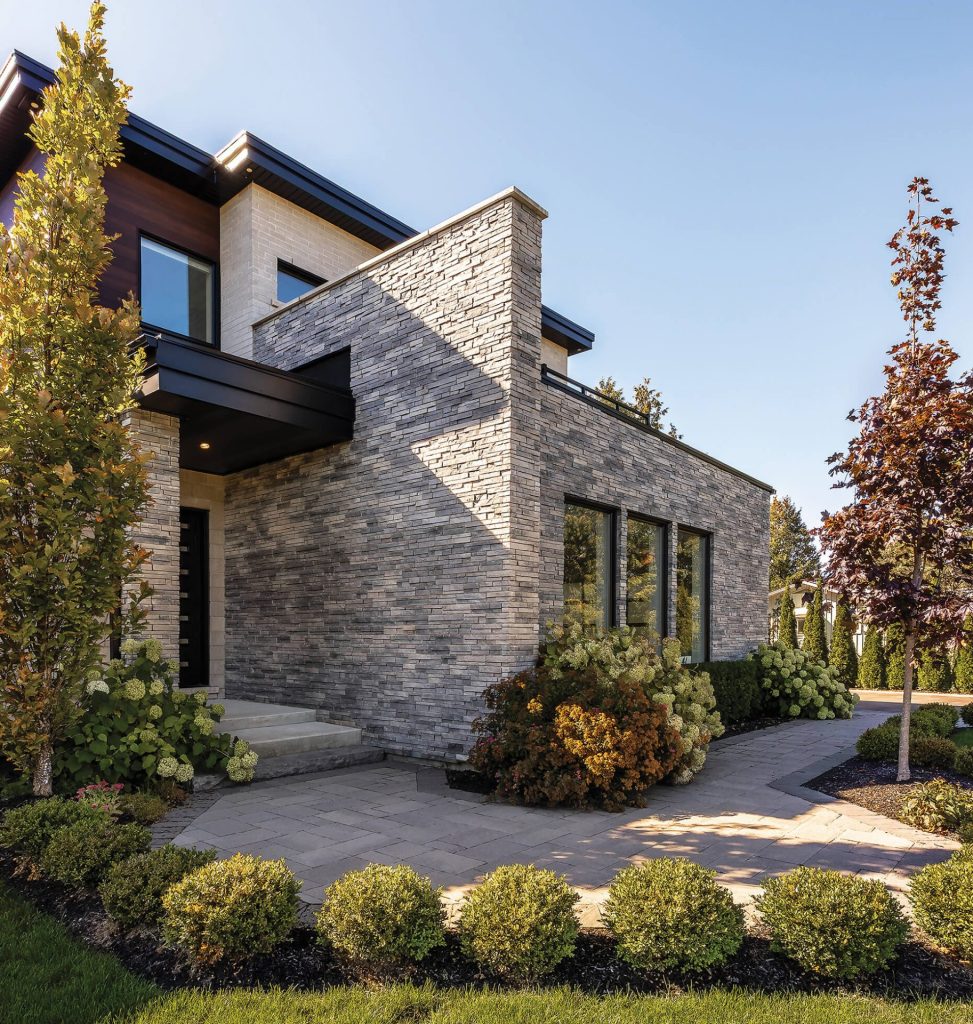
Lexa stone, in the large format in Alpine Grey, creates more continuous, refined surfaces. Its clean lines follow the walls and reinforce the building’s contemporary style. Melville Slik brick, in the same tone, introduces a smooth surface that highlights the texture of the stone. These light-coloured materials frame the more textured stone and elevate the Lamina stone in an elegant way.
Lamina Stone Repeated on Columns
Lamina stone is also used on the columns, ensuring visual continuity with the rest of the facade. This vertical repetition connects the ground floor with the upper levels of the home. The columns become true architectural elements rather than simple structural supports.
Masonry Suited to the Canadian environment.
The masonry cladding used in this project is well suited to Canada’s climate conditions. Its composition and density allow it to withstand freeze-thaw cycles and temperature fluctuations without compromising the appearance of the facade.
Vegetation as an Extension of the Facade
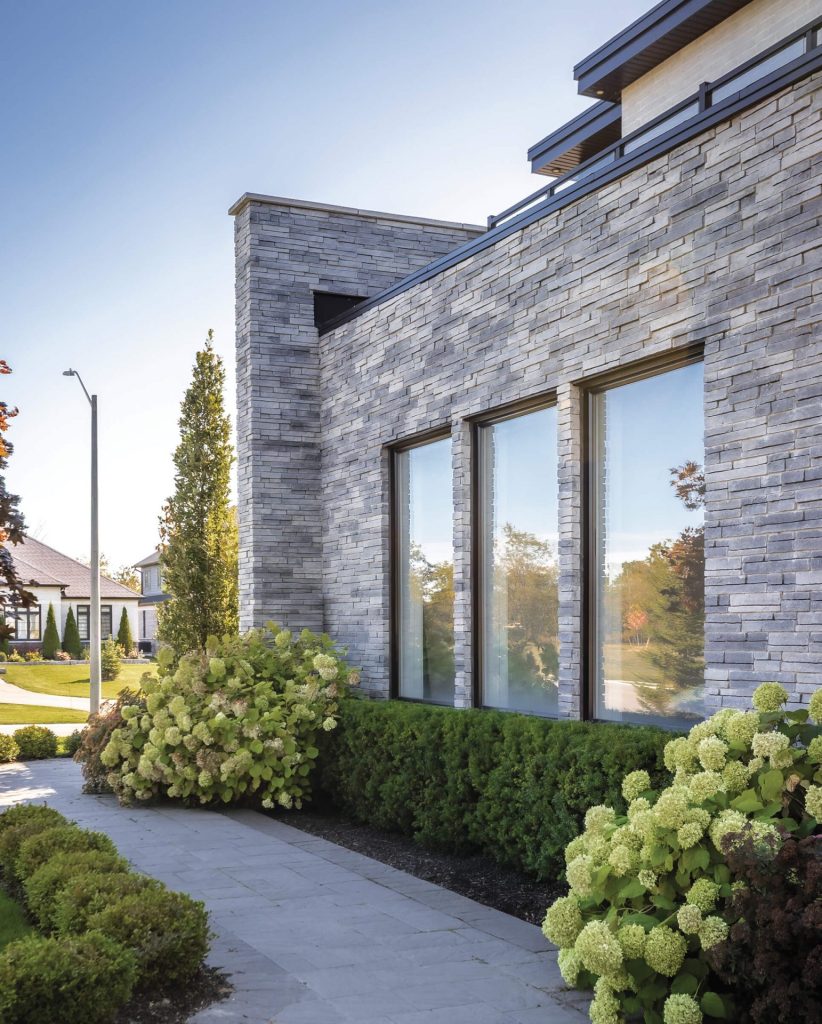
The landscape design complements the facade without concealing it. Flower beds run along the walls, emphasize masonry lines and soften transitions between different parts of the building. The vegetation plays with height and texture, bringing out the quality of the surfaces.
Other Ways to Use These Permacon Products
Lamina stone can be used across an entire facade or reserved for key elements such as columns or a specific wall section. Lexa stone and Melville Slik brick can be applied to the main surfaces or alternated on the same wall to vary textures.
When Brick and Stone Become Design Elements
This project is a great example of how stone and brick can be combined to add depth and character to a contemporary facade. Permacon products are used here as true design elements, organizing surfaces and creating an expressive, original facade without visual overload.
Ressources
For more information on the products, please refer to:
• 2026 Permacon Catalog
• Lexa Stone
• Lamina Stone
• Melville Slick Brick
Technical resources are available directly on each product page.
Other inspirations for the products mentioned
Leave a comment